Credit & Personal Finance
Is the Rise of Super Apps in Finance a Convenience Revolution — or the Fastest Way to Hand One Company Everything It Needs to Control Your Money?Super apps are rapidly transforming financial services by combining payments, banking, investing, budgeting, shopping, and messaging into a single digital platform. For consumers, the appeal is obvious: fewer apps, faster transactions, and a more connected financial experience. Yet this convenience comes with important trade-offs. As more financial activity flows through a single ecosystem, concerns over data privacy, market concentration, and consumer choice have intensified. Experts broadly agree that super apps can expand access to financial services and improve efficiency, but they differ on whether competition and regulation are sufficient to prevent excessive corporate influence. The debate is ultimately about far more than convenience—it is about who controls financial data, consumer choice, and the future architecture of digital finance.

Credit & Personal Finance
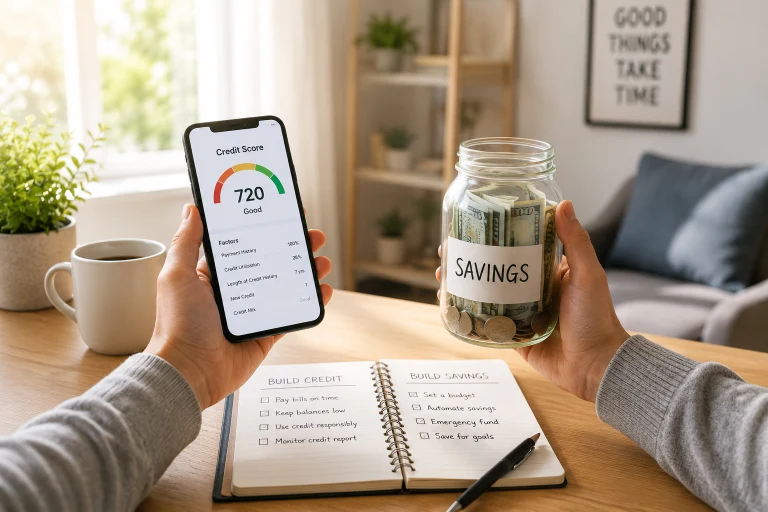
Should You Prioritize Building Credit History or Building Savings — and Can You Actually Do Both at the Same Time?For many people, personal finance feels like a choice between two competing priorities: building a strong credit history or growing meaningful savings. One opens doors to mortgages, affordable loans, and financial opportunities, while the other provides security when life takes an unexpected turn. Recent economic uncertainty has made both objectives increasingly important, leaving many wondering which deserves attention first. Financial experts broadly agree that neither should be ignored, although they differ on how to balance them. The emerging consensus is that financial resilience comes not from choosing one over the other, but from developing a strategy that gradually strengthens both while avoiding unnecessary debt and maintaining flexibility for future goals.
Credit & Personal Finance
Is Your Emergency Fund Sitting in the Wrong Place — and Quietly Losing Value Every Month It Stays There?An emergency fund is designed to provide financial security when life becomes unpredictable—but where that money is kept can make a significant difference. As inflation erodes purchasing power and interest rates fluctuate, leaving cash in a low-interest current or savings account may quietly reduce its real value over time. Financial experts broadly agree that emergency savings should remain accessible, but they differ on whether part of that money should also be invested to outpace inflation. The debate is no longer simply about how much to save. It's about finding the right balance between liquidity, safety, and preserving the spending power of the money you'll need most when emergencies strike.

Credit & Personal Finance
Is the 60/40 Portfolio Still the Gold Standard for Retirement — or a Formula That Stopped Working When Bonds Did?For decades, the 60/40 portfolio—60% stocks and 40% bonds—served as the cornerstone of retirement investing, offering a balance between growth and stability. But years of historically low interest rates, followed by persistent inflation and rapidly rising bond yields, have challenged many of the assumptions that made the strategy so successful. Some investment experts argue that retirees must look beyond the traditional formula to generate income and protect purchasing power, while others maintain that abandoning a disciplined allocation after a difficult period risks repeating a familiar investing mistake. The debate is no longer about whether the 60/40 portfolio worked in the past, but whether it remains the right framework for navigating the retirement challenges of the future.

Credit & Personal Finance
Is Refinancing Your Mortgage Right Now a Smart Move — or Are You Just Resetting a Clock You Were Almost Done With?Universal Basic Income promises to decouple survival from employment at a moment when automation threatens to make millions of jobs obsolete — but critics ask whether handing everyone a check is a visionary response to technological change or a politically convenient way to avoid the harder work of building an economy that actually works. Andrew Yang, Philippe Van Parijs, and Daron Acemoglu debate what UBI would actually do.

Credit & Personal Finance
Should You Ever Use a Personal Loan to Invest — or Is Leveraging Debt for Returns a Strategy That Only Sounds Smart in a Bull Market?Everything you throw away goes somewhere — and for decades, most of it went to developing countries under the banner of recycling. Elizabeth Royte, Judith Enck, and Adam Minter debate whether recycling has ever been the solution it claimed to be, or whether it was always more about making consumers feel better than actually solving the problem.